
Locate Minnetonka Residents
No single official roll is titled a Minnetonka residents directory. The record trail is split across the city clerk, Hennepin County offices, the courts, and the library. The city clerk and the county offices hold separate pieces. The courts and the library hold the rest. An address question usually starts with the county property tools. A name question can start with a court index, a voter-status form, a business filing, or a historical collection. A court index may answer it. So may a voter-status form, a business filing, or a historical collection. Ownership, voter registration, and an old street directory line are all separate facts. None of them adds up to a current household list.
Write down the exact spelling, the date, and the office behind every result. A missing online record may simply sit at a counter, rest in an archive, or sit behind an access rule. It may simply sit at a counter. It may rest in an archive. Or it may sit behind an access rule. That gap alone never proves someone had no tie to Minnetonka.
- Verify an address with USPS, then search Hennepin Property Information Search or PINS for its PID.
- Use the PID and legal description in the recorder's land-title index.
- Use MNVotes or MCRO only for the separate fact each source can confirm.
- For earlier households, request Lake Minnetonka or Suburban Area directory volumes at Hennepin Library.
- Ask the proper custodian for inspection or copies when no online index has the public record.
Note: A record line is dated evidence, not a statement of current residence.
Minnetonka Residents by Parcel
Hennepin County Property Information Search opens with address, PID, addition-name, and map routes. A parcel result can carry the property address, owner or taxpayer, mailing address, legal description, tax and assessment fields, sales history, and links to recent recordings. One limitation matters here. The public interface is built around the parcel, not the owner name, so a name-only resident lookup in Minnetonka will need a different starting point.
| PINS field | Use |
|---|---|
| House number and street | Both are required for an address search; street needs at least three characters. |
| Property ID | Use the 13-digit PID; spaces and dashes may be omitted. |
| Addition, lot, block | Use the legal-description route when an address changed or a plat is clearer. |
| Unit | Optional for a multifamily address. |
PINS refreshes on weekday nights and normalizes common abbreviations, directions, county roads, and state highways. The city assessing page works as a local fallback for an address or PIN. Be careful with taxpayer mailing addresses, though. They can differ from the situs address. So a mailing address alone is not proof of who lives there.
The county property gateway lays out the address, PID, addition, and map options. It puts them all on one screen.
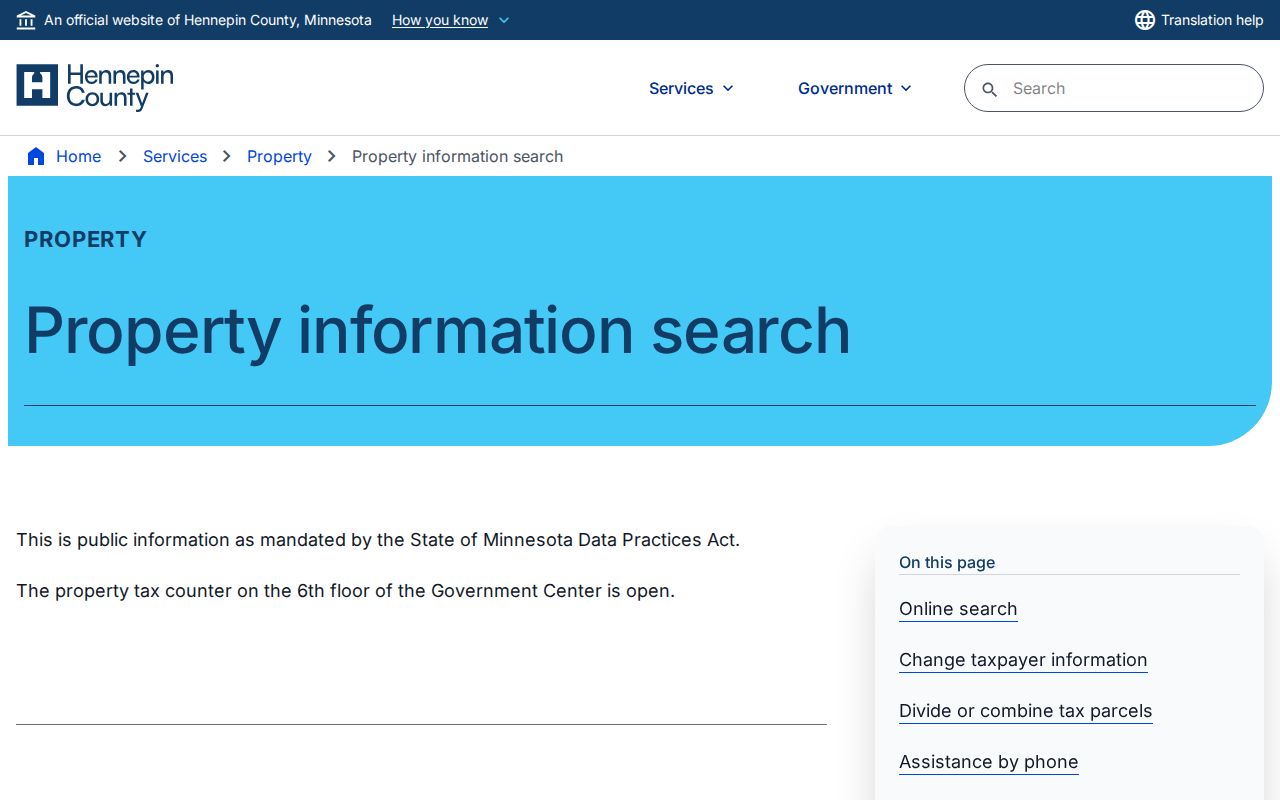
The landing page runs the address-to-parcel search, and the result card supplies the fields worth comparing.
Minnetonka Deed Index Trail
RecordEASE Public Search is Hennepin County's land-title index gateway. Deeds, mortgages, liens, releases, and plats can connect parties to a parcel through time. Begin with the legal description when possible. Hennepin's Abstract and Torrens paths, plus addition, lot, and block inputs, make the deed chain more dependable than a guessed street-name search.
Historic tract pages were converted back to 1850 and plats run from 1850 forward. Public remote access is limited. The county research center, kiosks, RecordEASE Pro, virtual recorder, mail copies, and an owner's electronic-deed request provide separate access channels. Record the grantor, grantee, date, instrument number, and legal description from each result.
The RecordEASE index provides the first search screen.
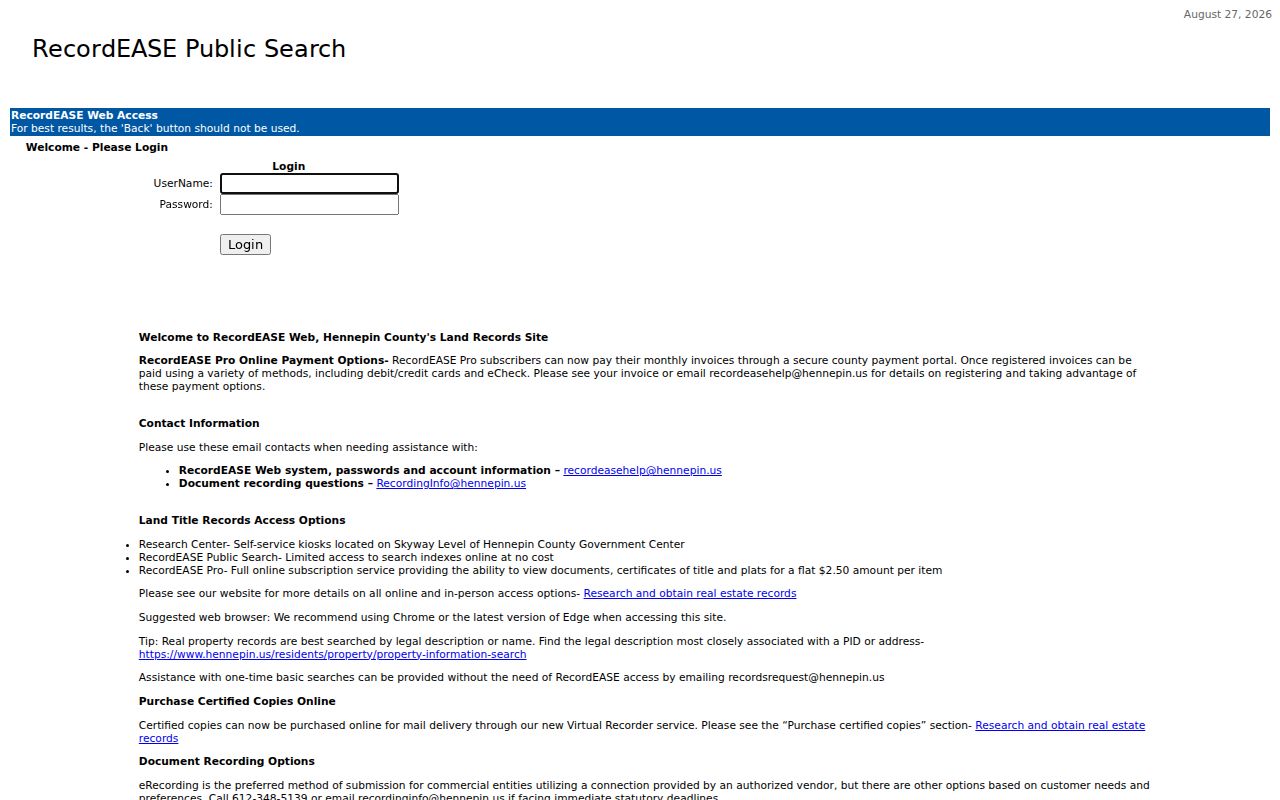
A seller found in one deed can then be searched as an earlier buyer. That step forms the backward link in a Minnetonka land record chain.
- Parcel
- A defined tract identified by a PID and legal description.
- Index
- A finding tool, not always the document image.
- Grantor and grantee
- The party conveying and the party receiving an interest.
- Criss-cross directory
- A directory arranged by address for historical household research.
Minnetonka Resident Records Desks
Hennepin County operates the core land and court systems behind any Minnetonka residents directory, while the city clerk serves as custodian of city documents. Go to the agency that actually holds the record. A Minnetonka street address does not mean every record sits at city hall.
Hennepin Recorder / Registrar
300 South Sixth Street, Minneapolis, MN 55487
Hennepin Property Information
County Government Center, Minneapolis
612-348-3011
Minnetonka Residents in Current Rolls
Current rolls in Minnetonka do not describe the same people or the same facts. A property card captures a taxpayer or owner connection. The voter-status form confirms one person's registration. Recorded documents list the parties to an instrument. A court index lists public case information, and city archives hold address-linked permits, plans, inspections, and official documents. The access limits on each source matter as much as the results themselves.
| Source | What it shows | Keeper | Access |
|---|---|---|---|
| Parcel card | Owner or taxpayer and property fields | Hennepin County | Portal, PINS, counter, phone, email |
| Voter status | Individual registration confirmation | Minnesota Secretary of State | Online form |
| Land index | Deed and instrument parties | Hennepin Recorder | Index, research center, copy channels |
| Court index | Public case and party information | Minnesota courts | MCRO, MNPAC, Records Center |
For a one-person trail, the Minnetonka resident lookup fits better than a street-wide approach. Note: Ownership and registration are separate facts, even at a single address.
Minnetonka Voter Status Rules
Minnesota's voter-status form asks for a first and last name. It also asks for a date of birth. The address route runs through ZIP or county, city or township, house number, street, and an optional unit. Records refresh nightly. A match confirms one individual's registration status. It does not publish a browseable street list or another person's voter file.
Section 201.091 governs public voter data. A geographic or walking-list request is a different product entirely. It requires a registered Minnesota voter, a lawful-purpose certification, and compliance with publication restrictions.
The official screen shows the separate name, birth-date, and address controls.
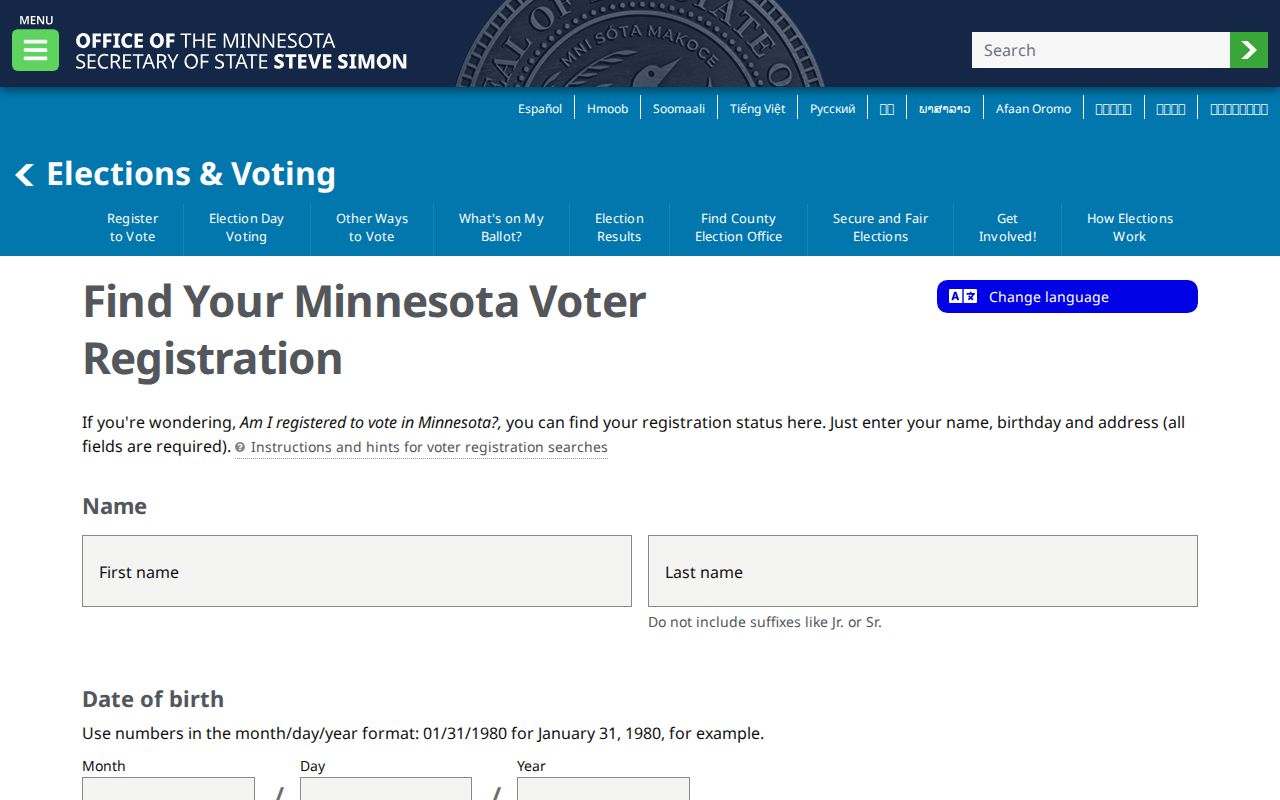
Exact name spelling, unit information, and the postal address affect an individual match.
Minnetonka Court Record Matches
MCRO searches public district-court information by name, case number, citation, or attorney. Name searches accept a middle name, a trailing wildcard, a Sounds Like option, date-of-birth and filed-date ranges, category, status, and court location. Try name variants with care. Same-name results pile up fast.
A docket can show the case number, category, location, party roles, filing and hearing dates, public Register of Actions events, disposition language, and eligible documents. MCRO is not a complete criminal-history report, though. MNPAC terminals and the Hennepin Records Center offer fuller permitted access, archived records, and certified copies.
The MCRO search screen displays the search tabs and filters.
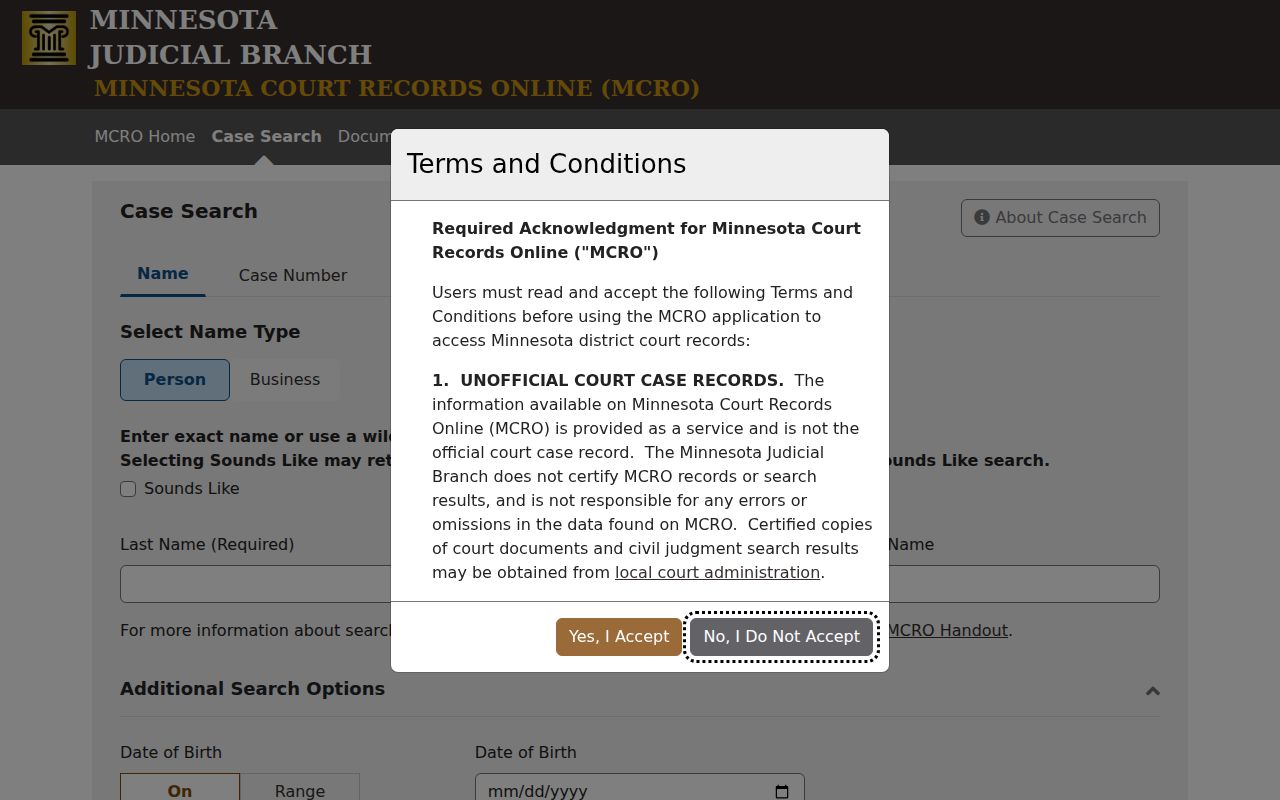
Sealed, juvenile, expunged, adoption, and protected material can be unavailable or redacted.
Minnetonka Data Access Route
Minnesota opens its government data by default. Under the Minnesota Statutes section 13.03, data stay public unless a separate law classifies them otherwise. Inspection is free. A custodian may set a reasonable time and place for review. Copies can carry allowed fees for copying or special formats. The statute does not force an agency to build a new record. It will not order up a new analysis just because someone asks.
Minnetonka sends record requests to City Clerk Becky Koosman, online or in writing. Name the record and the span of time it covers. Say whether inspection or copies are wanted. Also request the classification plus a fee estimate if anything gets withheld. Court files, land documents, and vital records each sit with their own specialized custodians. None of them belong to the city.
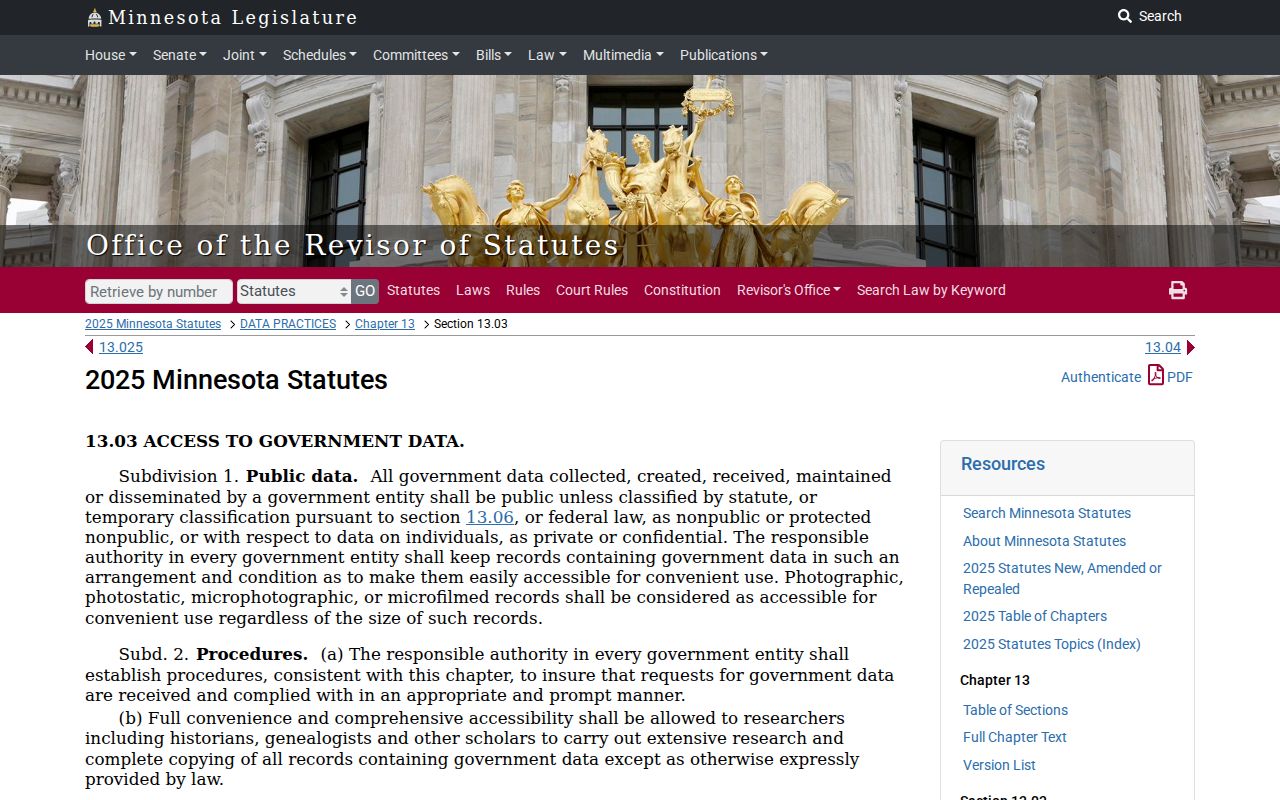
The statute supports access to existing public records, not private or confidential data.
Minnetonka Vital Record Boundaries
Vital records will never double as a general residents directory. Minnesota Department of Health and Hennepin County vital offices each keep records. Each office runs its own forms and eligibility rules. Births reach back to 1900 and deaths to 1908 in the statewide system. Noncertified death records count as public informational products. Certified birth copies demand an eligible relationship, identification, and a notarized signature. Confidential births face tighter limits under section 144.225.
Marriage certificates belong to the county that issued them. Divorce decrees live at the district court. County service offices tend to move fastest. MDH takes mail or fax applications and refuses email or walk-in counter requests. The MDH products page posts the forms, fees, and eligibility details.
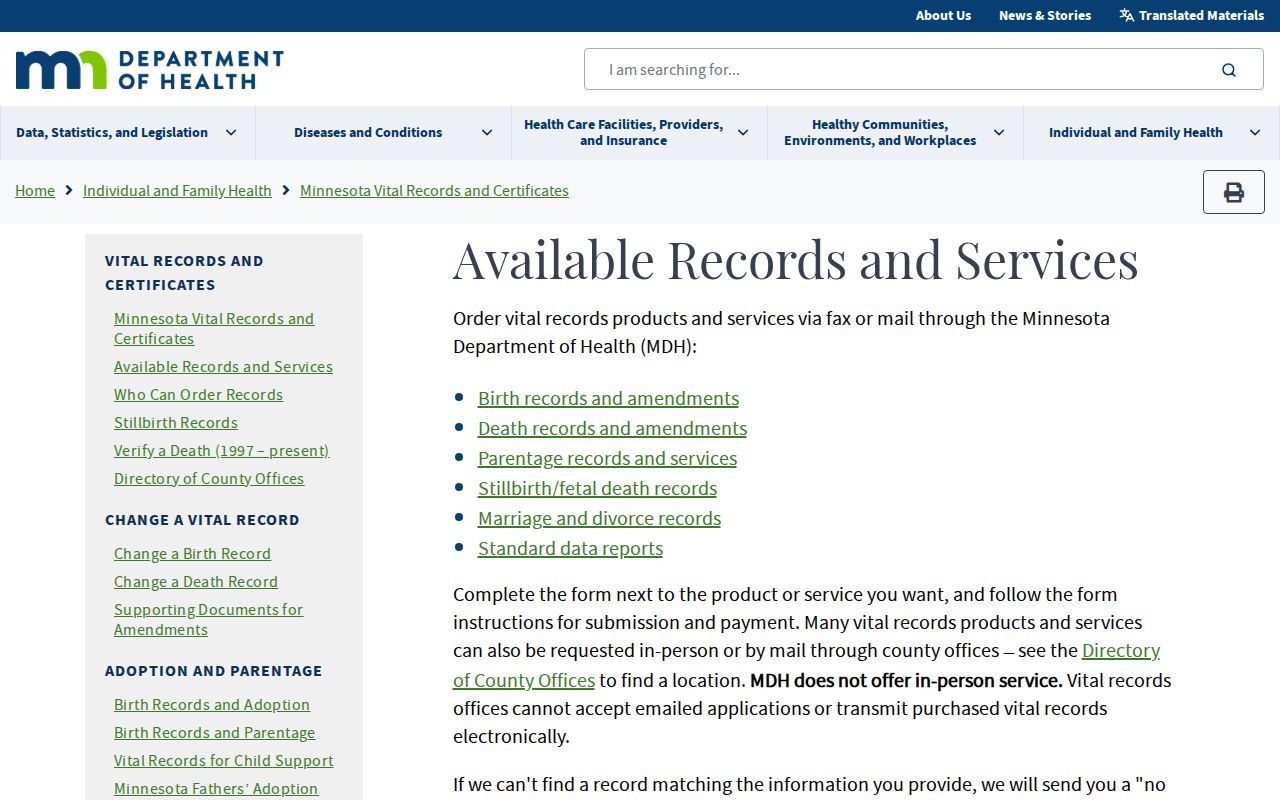
Select the record product first, then follow its specified custodian and application route.
Minnetonka Historical Resident Directories
Hennepin Library Special Collections is the region's memory bank. Its shelves hold city directories and reverse address tools. Newspapers, clippings, maps, yearbooks, microform, and genealogy resources sit alongside them. Lake Minnetonka directory dates need a careful eye. The digital browse label reads 1940 to 1977. The search-help label reads 1941 to 1977, so confirm the image and year of the volume in hand.
Printed Suburban Area directories span 1956 to 1988, though coverage by city varies. The library also keeps clippings indexed by address, homeowner, and architect. Those run from roughly the 1920s through the 1980s. Treat any historical listing as a snapshot. Pair it with a deed, census record, or permit before trusting it. The Minnetonka city directories page walks the full shelf.
Minnetonka Record Name Changes
Minnetonka Township bled land to annexations between 1946 and 1955. It incorporated as a village in 1956 and became a city in 1968. Old records may say Minnetonka Township, Minnetonka Mills, Glen Lake, Groveland, or Oak Knoll instead. A household can look like it moved when only the government label shifted around it.
Keep the original place name in your notes. Then search the legal description, historic parcel sections, directories, permits, and clippings. Use the label from that era. Note: Postal city labels and municipal boundaries must be checked separately.
Minnetonka Search Safety Limits
Minnesota Safe at Home gives qualifying participants a substitute address with mail forwarding. Never mine older records to pin a protected result to an actual location. Sealing orders, juvenile protections, or data classification can also wall off court records. City records can be walled off too. Official records name their custodian, date, and scope. Commercial people-finder listings grow stale. They can also blur people who share a name.