
Minnetonka City Directory Collections
Hennepin County Library Special Collections is the main local channel for an older Minnetonka household trail. Its Researching Homes resource points to directories for prior occupants and, in some volumes, spouse, children, or occupation details. It also connects an address search to clippings, permits, property records, and maps. When an online result does not expose the needed page, Special Collections is the practical fallback for print volumes, microform, and librarian-assisted research. The library lists specialcoll@hclib.org and 612-543-8200 for that service.
| Collection | Years | Where Held | Access |
|---|---|---|---|
| Lake Minnetonka City Directories | 1940-1977 browse label; 1941-1977 searchable label | Hennepin Library digital browse, NMT Vault, and Special Collections | Name, address, and reverse-address research; confirm the individual volume |
| Suburban Area directories | 1956-1988 printed run | Hennepin Library Special Collections | Print research; city coverage varies by volume |
| Hopkins city directories | 1942-1977 | Hennepin Library digital directory collections | Use for adjacent-area and postal-label leads |
| Minnetonka Voyageur yearbooks | Selected runs from 1953 through 2017 | Hennepin Library yearbook collection | School, grade, activity, and name context |
The date conflict in the Lake Minnetonka collection matters. The digital browse label says 1940-1977, while the library search-tips sheet calls the searchable form 1941-1977. Treat both as collection descriptions, not proof of a missing first year. Open or request the volume for the year in question and record its title, page, and image identifier.
Note: A nearby-city listing can be a valuable movement lead, but it does not establish that the household lived in Minnetonka.
Minnetonka Lake Directory Year Labels
Lake Minnetonka is both a collection title and a regional description, so it should not be treated as a modern municipal boundary. Search a Minnetonka surname in the Lake Minnetonka collection first, then test initials, a spouse's name, and alternate spellings. The library's controls support exact-text and case-insensitive searching, plus wildcard characters after the first character. The search guidance does not call for Boolean operators or quotation marks.
The printed Suburban Area run supplies another layer from 1956 through 1988. It can include suburban households, addresses, and business or professional listings, but the research does not confirm that every individual city appears in every volume. A result or a gap should therefore be checked against the actual edition rather than inferred from the overall run dates.
Hennepin Library's digital collection browse interface is the starting point for a Minnetonka city directory image or title search.
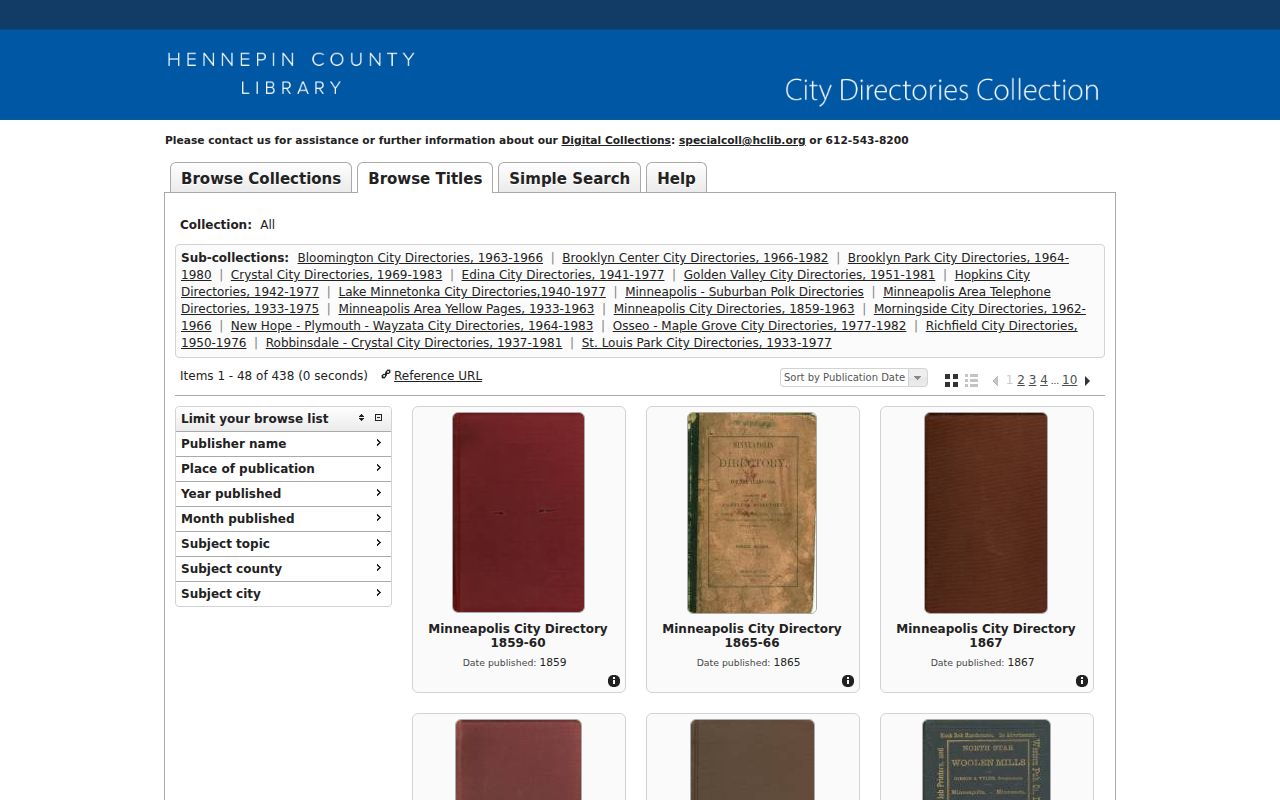
Browse collections and titles, run a simple search, then open the item itself before relying on a text hit. Page navigation and the grid or list display help distinguish a directory volume from an individual scanned page.
Minnetonka City Directory Browsing
A searchable transcription is a lead, not a substitute for the printed page. Initials, punctuation, abbreviations, and a column break can affect what the text index returns. Keep the search string that produced the result, and save the volume year and page number. That small record makes the find reproducible when a surname is common or a relative uses a different spelling.
Hennepin County Library Digital Collections also holds phone books and other digital items. Telephone material may offer a name, phone, or address lead, but its listings can be incomplete. If a result is unclear, Special Collections can help pair the directory with newspaper research, state census material, naturalization, obituary research, and microform.
Reading Minnetonka City Directory Entries
Directory entries are compact. The library describes them as address and name records that may include spouse or household details, an occupation, an employer, and an address. Transcribe what is printed, including initials and punctuation. Do not silently expand an abbreviation or assume a relationship from two people sharing a surname. The accessible research did not expose one scanned Minnetonka line with a verified field order, so the volume's own abbreviation key should control interpretation.
| Household name | Record the surname, given name, initials, and any cross-reference exactly as printed. |
|---|---|
| Spouse or widow notation | Parenthetical spouse information or a widow abbreviation can be a family-history lead, not independent proof. |
| Work information | Occupation, trade, employer, or company may appear when the particular edition supplied it. |
| Address line | Capture the house number, street, unit or room, and any business or residence indicator. |
| Volume reference | Keep the directory year, page, item image, and the publisher's abbreviations with the transcription. |
These are the useful fields to inventory when a line is found. Phone-book material can also show a telephone number, while some entries include a moved or see-reference. Each feature depends on the edition, so absence of a field is not evidence that the household had no such connection.
- Criss-cross directory
- Address-ordered material used to turn a street and number into a listed name. Hennepin Library supports reverse or address searching, but the research did not locate a separately titled complete reverse run.
- Householder index
- A name arrangement that points to a household line. Its exact scope and labels depend on the volume being used.
- Abbreviation key
- The publisher's explanation of shortened terms. Photograph or transcribe it before interpreting a residence, business, spouse, or widow notation.
Minnetonka Reverse Address Searches
An address can be the better starting point when the family name is unknown. Hennepin Library describes reverse and address searching in its local-history resources. Search the street and number, identify the possible listed occupant, then test that name in the alphabetical material. Check the edition immediately before or after it as well. That repeat check can separate a persistent listing from a brief appearance.
Reverse material should be handled as a historical listing, not a claim about current occupancy. An old address can have changed number, postal label, parcel shape, or municipal name. For a modern street-level record chain, use the Minnetonka by-street directory after the historical address has been narrowed.
Note: A directory line records what an edition printed, so verify a move, death, or relationship with a second historical source.
Minnetonka Directory Place Names
Older materials can use Minnetonka Township, Minnetonka Mills, Glen Lake, Groveland, or Oak Knoll instead of the current city name. Minnetonka Township lost land through annexations from 1946 through 1955, incorporated as a village in 1956, and became a city in 1968. A household may appear to move when the label around it changed. Those names are search variants, not interchangeable jurisdictions.
| 1852 | European settlement at the Minnetonka Mills site provides an early place-name reference. |
|---|---|
| 1946-1955 | Annexations reduced Minnetonka Township and can affect the location label in older material. |
| 1956 | The township incorporated as a village, a useful boundary for civic terminology in records. |
| 1968 | Minnetonka officially became a city, bringing the modern municipal label into use. |
Try Hopkins, Wayzata, Edina, St. Louis Park, and Minneapolis when an address sits near an historic or postal boundary. A deed's legal description is steadier than a place-name search when a record predates the modern city label.
Trace Minnetonka Households in City Directories
Following one household across editions works best when every result is recorded before the next search begins. Directories can provide near-annual snapshots, while census records provide a household view for a specific census date. Minnesota state-census years, 1865, 1875, 1885, 1895, and 1905, are especially helpful for a family whose trail predates the Lake Minnetonka run.
- Search the known surname and year, then repeat with initials, a spouse, and spelling variants.
- Record the page, address, occupation, household wording, and the exact abbreviation used.
- Search the address through reverse material, then confirm the resulting name in the alphabetical listing.
- Compare the nearest federal census release and the Minnesota state-census years to test household composition.
- Use an obituary, newspaper, yearbook, marriage, naturalization, or probate source to check movement or kinship.
- Retain the volume title, page image, and search string so another person can repeat the research.
A disappearance has several possible causes. The household may have moved, died, changed its preferred name, appeared under a spouse, or simply not been listed. A neighboring directory, census image, obituary, or property record can sort those possibilities without turning a gap into a conclusion.
Minnetonka Yearbooks and Local History
The Voyageur yearbook run gives a useful former-classmate and school-community layer. Hennepin Library lists selected Minnetonka High editions for 1953; 1955-57; 1959-64; 1966-71; 1974; 1978-80; 1984-87; 1989; 1991-92; 2000-02; 2004-07; 2011-14; and 2017. The Minnetonka Junior High run covers 1983-93, while East, Glen Lake, and Gatewood editions add selected feeder-school years. Record the edition, school, page, grade, and activity because a school name can reflect changing boundaries.
Hennepin History Museum digital collections add oral histories, local articles, photographs, and regional context to the Minnetonka directory trail. Its research library is at 2303 Third Avenue South in Minneapolis, with 612-870-1329 listed for contact.
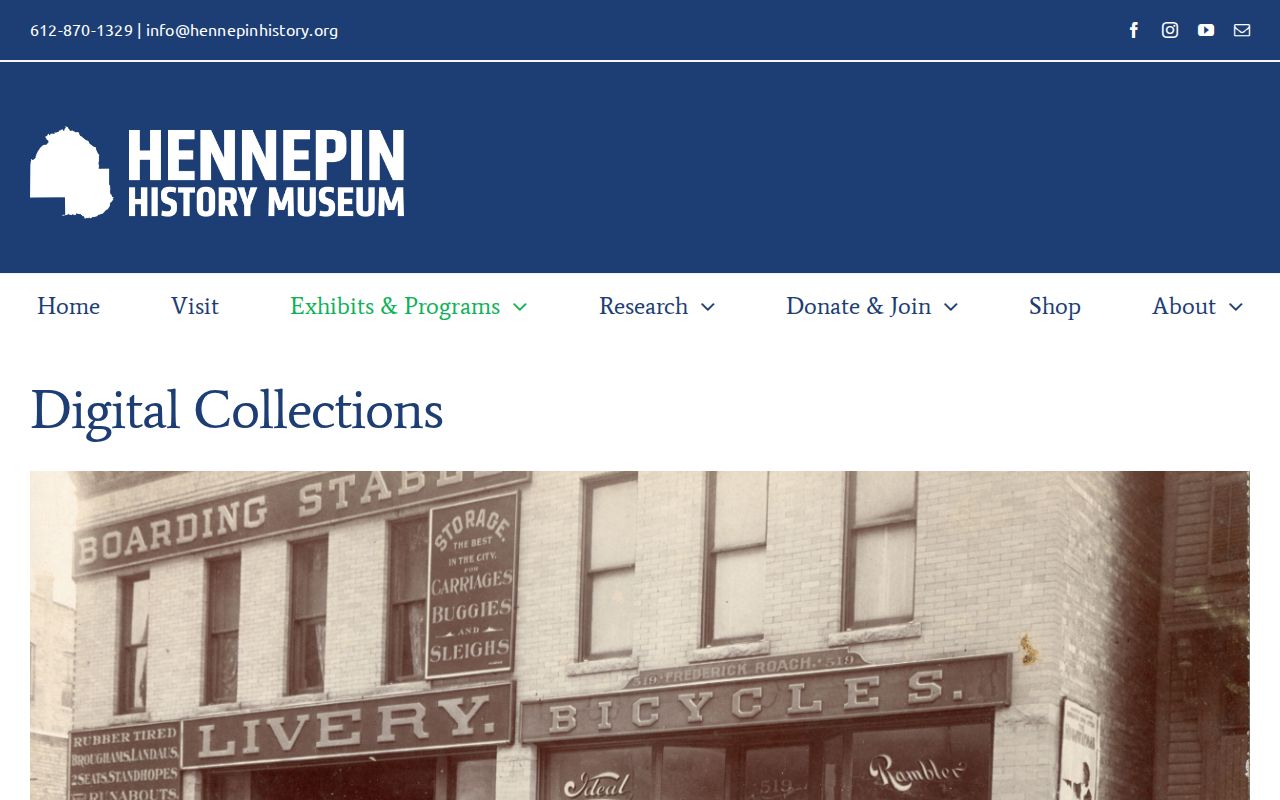
An oral-history transcript or local article can explain a neighborhood word, business, or place reference that appears in a directory. It is a lead to corroborate with a record custodian's file, rather than proof of a resident fact by itself.
Minnetonka City Directory Companions
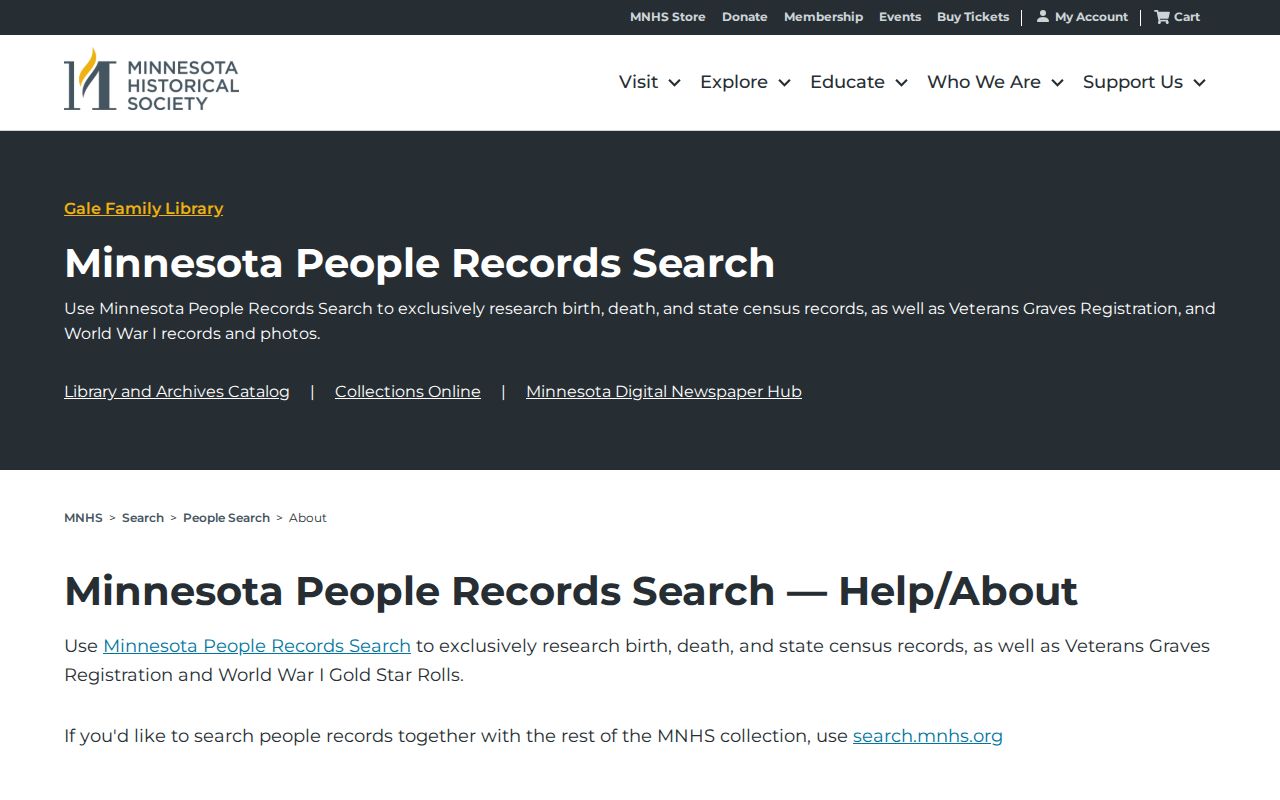
MNHS People Search can connect a household line to birth indexes for 1900-1934, death indexes for 1904-2001, state census material from 1849-1905, Veterans Graves, and World War I Gold Star Rolls. Its search methods include alternate spellings, starts-with, Soundex, county, and date strategies. Transcriptions can contain errors, so an index result should be checked against an image or custodian record when the claim matters.
The MNHS Gale Family Library and State Archives add naturalization, tax records, maps, microfilm, newspapers, and off-site civil files. Off-site archival retrieval is scheduled, so contact the library before a visit rather than expecting a same-day box pull. Those channels are especially useful when a directory year predates the digital collection or a household is known through a county record rather than a city listing.
MNHS People Search provides the index descriptions and search access for these Minnesota historical resources.
Hennepin Library also maintains clippings by address, homeowner, and architect from roughly the 1920s through the 1980s, and the Star Tribune Archive is available in the library from 1867 onward. Search the surname with Minnetonka, Hopkins, Wayzata, Minneapolis, or a funeral-home name when the place label shifts.
Note: Yearbooks, clippings, and indexes can support family history, but they should not be treated as proof of a current identity or address.