
Locate Minnetonka Residents
No official roll calls itself a Minnetonka residents directory. The city clerk, Hennepin County offices, courts, and library each keep a different part of the trail. An address usually begins with the property tools. A name can begin with an official court, voter-status, business, or historical index. Ownership, a voter-status confirmation, and an old directory line are different events. None is a complete current household list.
Keep the spelling used, date searched, and office that supplied every result. An absent web record may mean that it is held at a counter, in an archive, or under an access rule. It does not prove that a person was never connected to Minnetonka.
- Verify an address with USPS, then search Hennepin Property Information Search or PINS for its PID.
- Use the PID and legal description in the recorder's land-title index.
- Use MNVotes or MCRO only for the separate fact each source can confirm.
- For earlier households, request Lake Minnetonka or Suburban Area directory volumes at Hennepin Library.
- Ask the proper custodian for inspection or copies when no online index has the public record.
Note: A record line is dated evidence, not a statement of current residence.
Minnetonka Residents by Parcel
Hennepin County Property Information Search offers address, PID, addition-name, and map routes. A parcel result can show the property address, owner or taxpayer, mailing address, legal description, tax and assessment fields, sales information, and recent-recording links. The basic public interface is not an owner-name search, which matters when a name is the only starting point.
| PINS field | Use |
|---|---|
| House number and street | Both are required for an address search; street needs at least three characters. |
| Property ID | Use the 13-digit PID; spaces and dashes may be omitted. |
| Addition, lot, block | Use the legal-description route when an address changed or a plat is clearer. |
| Unit | Optional for a multifamily address. |
PINS updates on weekday nights and normalizes standard abbreviations, directions, county roads, and state highways. The city assessing page is a local address or PIN fallback. A taxpayer mailing address can differ from the situs address, so it must not be treated as proof of a resident.
The county property gateway shows its address, PID, addition, and map options.
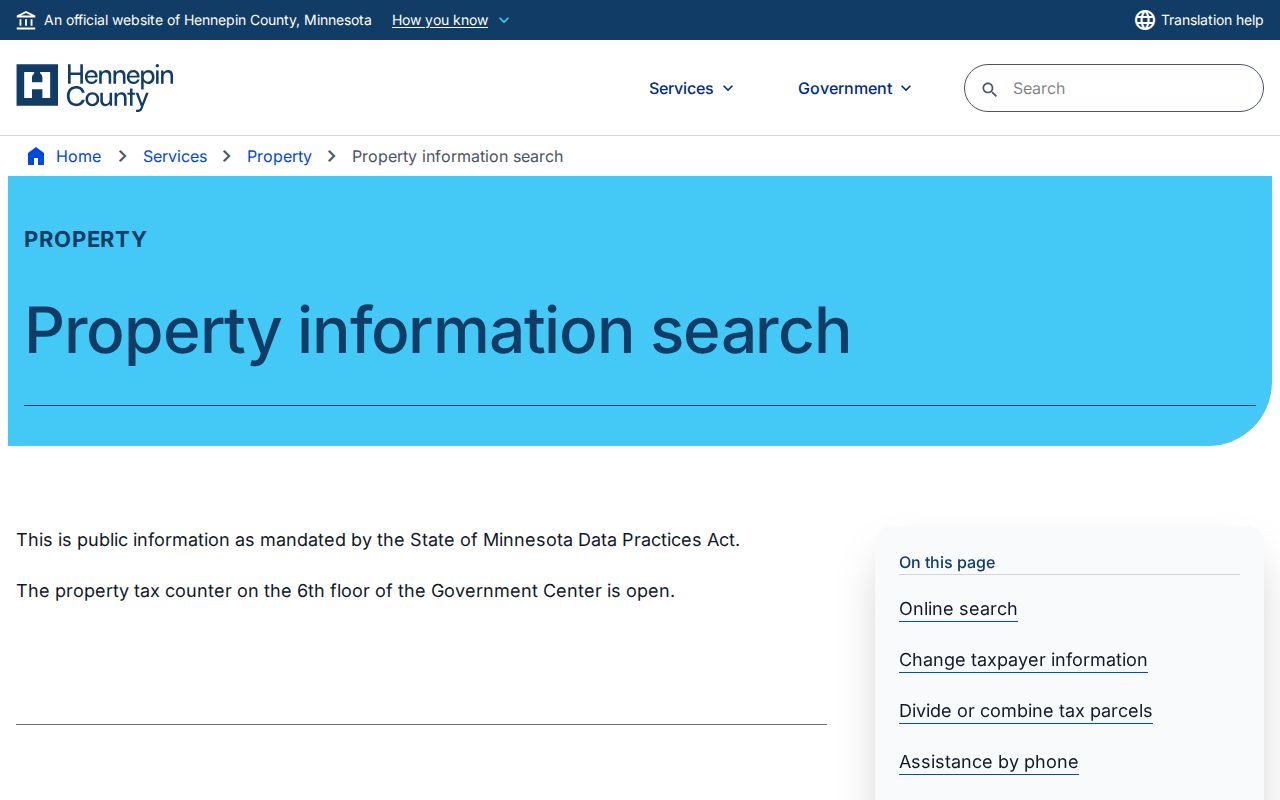
The landing page starts an address-to-parcel search; the result card supplies the record fields to compare.
Minnetonka Deed Index Trail
RecordEASE Public Search is Hennepin County's land-title index gateway. Deeds, mortgages, liens, releases, and plats can connect parties to a parcel through time. Begin with the legal description when possible. Hennepin's Abstract and Torrens paths, plus addition, lot, and block inputs, make the deed chain more dependable than a guessed street-name search.
Historic tract pages were converted back to 1850 and plats run from 1850 forward. Public remote access is limited. The county research center, kiosks, RecordEASE Pro, virtual recorder, mail copies, and an owner's electronic-deed request provide separate access channels. Record the grantor, grantee, date, instrument number, and legal description from each result.
The RecordEASE index provides the first search screen.
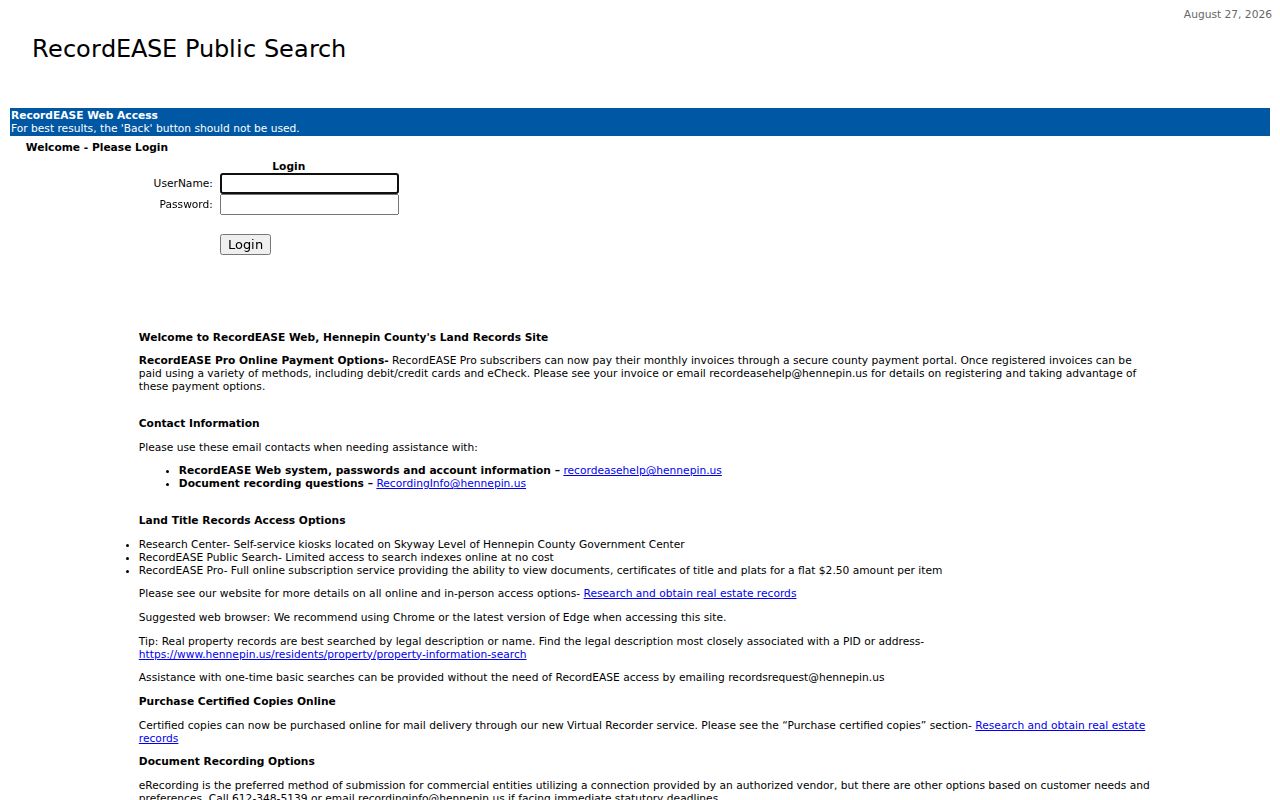
A seller can then be searched as an earlier buyer, providing the backward link in a land record chain.
- Parcel
- A defined tract identified by a PID and legal description.
- Index
- A finding tool, not always the document image.
- Grantor and grantee
- The party conveying and the party receiving an interest.
- Criss-cross directory
- A directory arranged by address for historical household research.
Minnetonka Resident Records Desks
Hennepin County keeps the core land and court systems behind a Minnetonka residents directory, while the city clerk is the public-data custodian for city documents. Use the agency that holds the record rather than assuming that a city address means every record is at city hall.
Hennepin Recorder / Registrar
300 South Sixth Street, Minneapolis, MN 55487
Hennepin Property Information
County Government Center, Minneapolis
612-348-3011
Minnetonka Residents in Current Rolls
Current sources do not cover the same people or facts. A property card describes a taxpayer or owner connection. The voter-status form confirms individual registration. Recorded documents list instrument parties. A court index lists public case information. City archives hold address-linked permits, plans, inspections, and official documents. The separate access limits are as important as the result.
| Source | What it shows | Keeper | Access |
|---|---|---|---|
| Parcel card | Owner or taxpayer and property fields | Hennepin County | Portal, PINS, counter, phone, email |
| Voter status | Individual registration confirmation | Minnesota Secretary of State | Online form |
| Land index | Deed and instrument parties | Hennepin Recorder | Index, research center, copy channels |
| Court index | Public case and party information | Minnesota courts | MCRO, MNPAC, Records Center |
For a one-person trail, use the Minnetonka resident lookup rather than a street-wide approach. Note: Ownership and registration are separate facts, even at one address.
Minnetonka Voter Status Rules
Minnesota's voter-status form uses first and last name, date of birth, and an address route through ZIP or county, city or township, house number, street, and optional unit. Records update nightly. A match confirms individual registration status and does not publish a browseable street list or another person's voter file.
Section 201.091 controls public voter data. A geographic or walking-list request is a different product requiring a registered Minnesota voter, lawful-purpose certification, and compliance with publication restrictions.
The official screen shows the separate name, birth-date, and address controls.
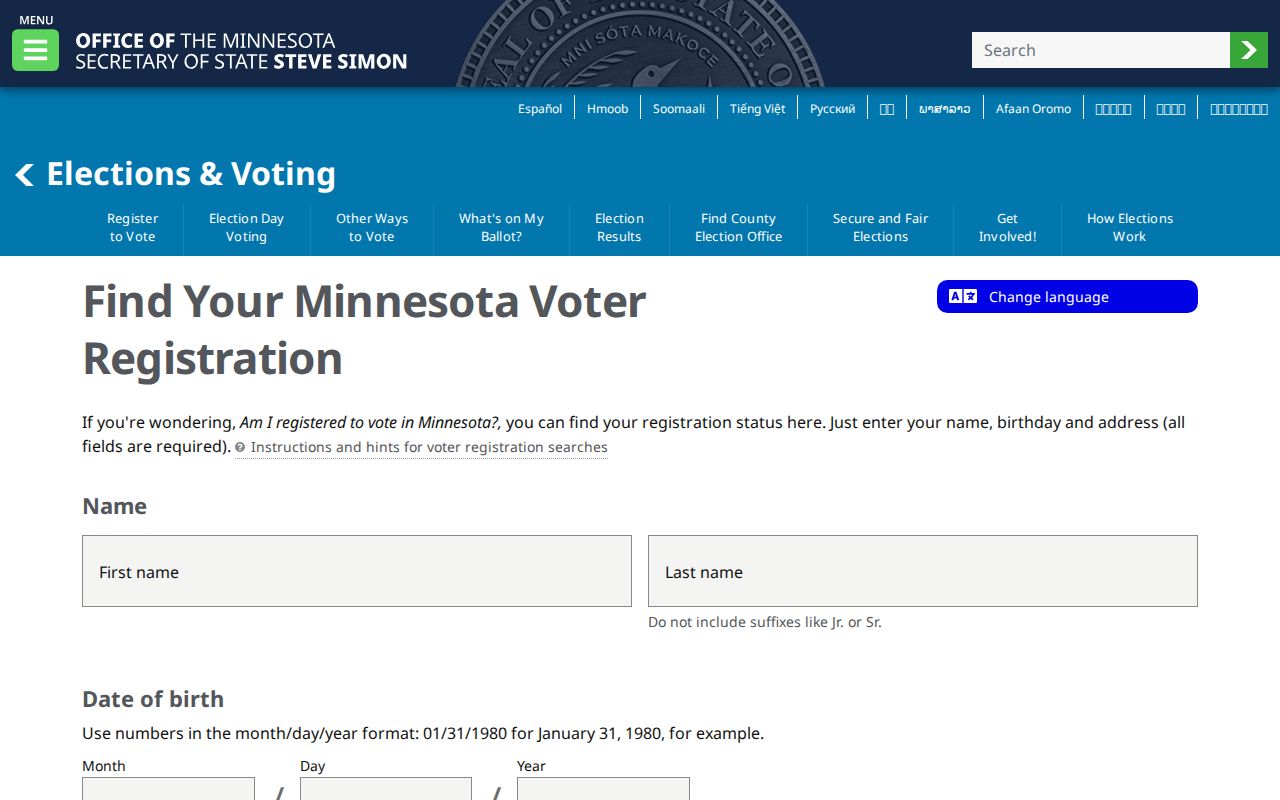
Exact name spelling, unit information, and the postal address affect an individual match.
Minnetonka Court Record Matches
MCRO searches public district-court information by name, case number, citation, or attorney. Name searches support a middle name, trailing wildcard, Sounds Like option, date-of-birth and filed-date ranges, category, status, and court location. Use name variants carefully to control same-name results.
A docket may show case number, category, location, party roles, filing and hearing dates, public Register of Actions events, disposition language, and eligible documents. MCRO is not a complete criminal-history report. MNPAC terminals and the Hennepin Records Center provide fuller permitted access, archived records, and certified copies.
The MCRO search screen displays the search tabs and filters.
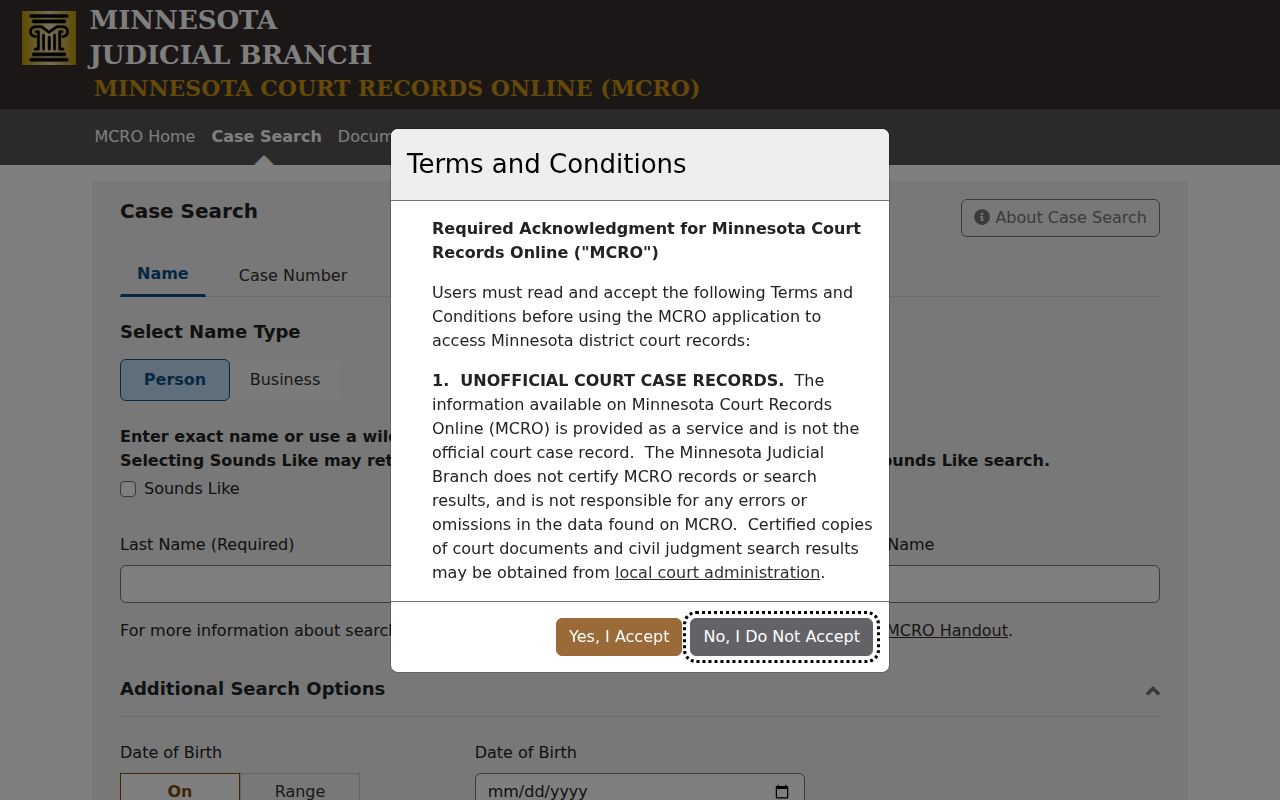
Sealed, juvenile, expunged, adoption, and protected material can be unavailable or redacted.
Minnetonka Data Access Route
Minnesota Government Data Practices Act section 13.03 makes government data public unless another law classifies them otherwise. Public data may be inspected at a reasonable time and place without an inspection charge. Custodians can require a written request for copies and charge allowed copying or special-format costs. The law does not require an agency to create a new record or analysis.
Minnetonka routes requests online or in writing to City Clerk Becky Koosman. Describe the record and time span, request inspection or copies, and ask for the classification and fee estimate if material is withheld. Court, land, and vital records have their own specialized custodians.
Minnesota Statutes section 13.03 provides the statewide rule.
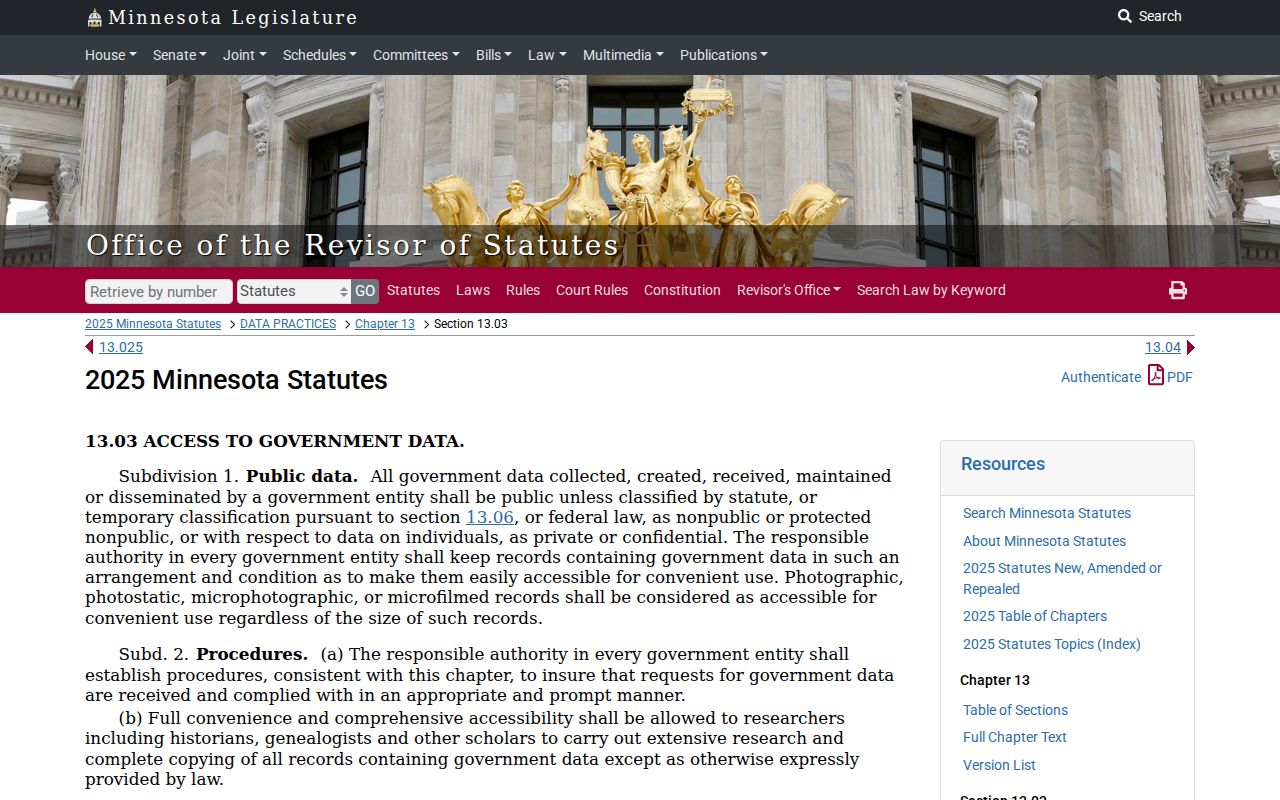
The statute supports access to existing public records, not private or confidential data.
Minnetonka Vital Record Boundaries
Vital products are not a general residents directory. Minnesota Department of Health and Hennepin County vital offices use separate forms and eligibility rules. Birth records from 1900 and death records from 1908 use the statewide system. Noncertified death records are public informational products. Certified birth requests need an eligible relationship, identification, and notarized signature, while confidential births have narrower access under section 144.225.
Marriage certificates come from the issuing county and divorce decrees from the district court. County service offices are generally the fastest route. MDH accepts mail or fax applications, not email or walk-in counter applications.
The MDH products page lists forms, fees, and eligibility.
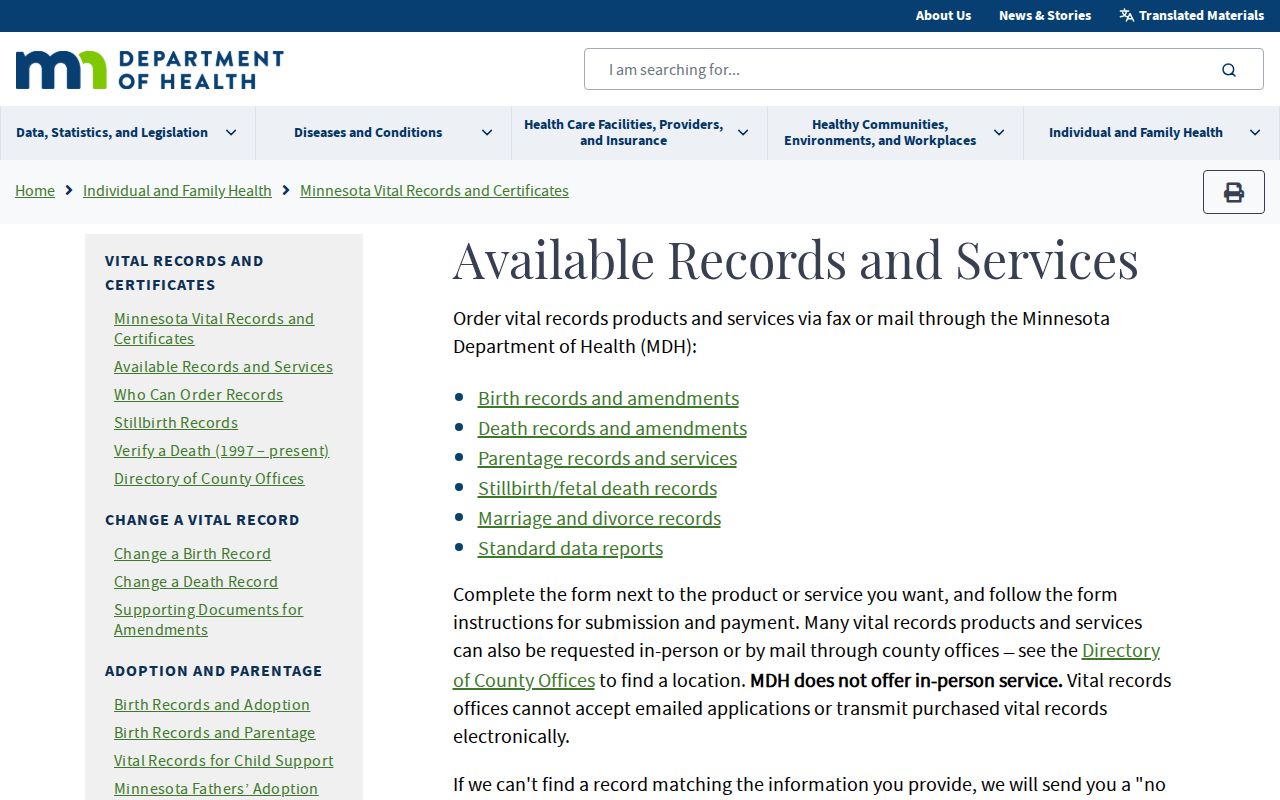
Select the record product first, then follow its specified custodian and application route.
Minnetonka Historical Resident Directories
Hennepin Library Special Collections holds city directories, reverse address tools, newspapers, clippings, maps, yearbooks, microform, and genealogy resources. Lake Minnetonka directory metadata requires care: the digital browse label says 1940 to 1977 and the search-help label says 1941 to 1977. Verify the image and year of the volume used.
Printed Suburban Area directories cover 1956 to 1988, but city coverage varies. HCL also holds clippings by address, homeowner, and architect from roughly the 1920s through the 1980s. A historical listing is a snapshot that should be paired with a deed, census, or permit. The Minnetonka city directories page covers the shelf in depth.
Minnetonka Record Name Changes
Minnetonka Township lost land to annexations between 1946 and 1955, incorporated as a village in 1956, and became a city in 1968. Older records may use Minnetonka Township, Minnetonka Mills, Glen Lake, Groveland, or Oak Knoll. A household can appear to move when the government label changed around it.
Keep the original place name in notes, then search the legal description, historic parcel sections, directories, permits, and clippings using the appropriate period label. Note: Postal city labels and municipal boundaries must be checked separately.
Minnetonka Search Safety Limits
Minnesota Safe at Home provides qualifying participants a substitute address and mail-forwarding service. Never use older records to reconcile a protected result to an actual location. Court and city records may also be restricted by sealing, juvenile protections, or data classification. Official records identify their custodian, date, and scope; commercial people-finder categories can be stale or mix people with similar names.